
Toy Testing: EN 71 Tests and CE Marking of Toys
October 1, 2026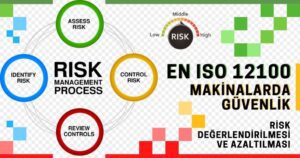
Machinery Risk Assessment to EN ISO 12100
October 1, 2026

Medical device testing is the group of tests that shows a device is safe, performs as intended and meets the requirements of the legislation. In the EU the legislation is the Medical Device Regulation (EU) 2017/745 (MDR). Turkey applies the same rules through its own Medical Device Regulation aligned with the MDR, so the test evidence prepared for CE marking is also the basis for placing the device on the Turkish market.
For medical device testing and CE marking, apply to CE Danışmanı (CE Consultant); we manage the whole process for you.
What counts as a medical device?
A medical device is an instrument, apparatus, appliance, material or software intended by its manufacturer to be used for people for purposes such as:
- Diagnosis, prevention, monitoring, treatment or alleviation of disease
- Diagnosis, monitoring, treatment or alleviation of an injury or disability
- Investigation, replacement or modification of the anatomy or of a physiological process
- Control of conception
Its principal intended action is not achieved by pharmacological, immunological or metabolic means, although it may be assisted by them.
The following are not covered by the medical device rules, because other legislation applies to them: in vitro diagnostic devices, medicinal products, cosmetic products, human blood and blood products, and transplants, tissues or cells of human or animal origin (except devices made with non-viable derivatives).
Device classes
The class of the device decides which conformity assessment procedure applies and how much evidence is needed.
| Class | Risk | Example |
|---|---|---|
| I | Low | External patient support products |
| IIa and IIb | Medium | Electro-medical devices |
| III | High | Cardiovascular catheters |
Tests that are carried out
There is no single “medical device test”. The tests depend on the device, its materials and its intended use.
Physical and physico-chemical tests
- Appearance, dimensions, cleanliness and volume
- Flow rate, specific gravity, conductivity and surface tension
- Leak tightness and absence of holes
- pH, acidity and alkalinity
- Graduation accuracy and dead space, for example for syringes
Purity and assay
- Atomic absorption spectroscopy (AAS)
- High-performance liquid chromatography (HPLC), gas chromatography (GC) and thin-layer chromatography
- FT-IR spectroscopy and spectrophotometric methods
- Thermal analysis, titrimetric and gravimetric methods
Mechanical tests
- Bending and breaking strength
- Compression, tensile and separation force
- Adhesive strength
Device-specific tests
- Coronary stents: expansion and recoil, balloon fatigue, burst and leak tests, dimensional checks and profile, dislodgement and collapse tests, stent diameter against inflation pressure, tensile force and trackability
- Surgical sutures and needles
- Performance evaluation of blood glucose meters
- Implant materials
- Biological and microbiological tests, including biocompatibility
Electrical safety and EMC
Active devices are also tested for electrical safety and electromagnetic compatibility, to confirm that they do not disturb the medical environment and do not put the patient at risk.
What the tests have to prove
- Safety: risks and side effects are identified, assessed and reduced; infection risk is reduced or removed; electrical, electromagnetic and mechanical safety is ensured; safety instructions are complete and easy to understand.
- Performance and benefit: the device does what the manufacturer claims, shown by clinical or diagnostic evaluation and by measurement accuracy.
- Follow-up: the manufacturer monitors the device throughout its life on the market.
Testing should start at the design stage. A problem found late sends the project back to the beginning and costs time.
Technical documentation
The test results go into the technical documentation of the device, together with:
- The mechanism of action of the device
- The intended purpose, place and duration of use, and the patient population
- The classification and the rule it is based on
- The design summary and the composition of the device
- The checklist of the general safety and performance requirements
- Risk management documents
- The clinical evaluation report
- Validations and test results
- Instructions for use
The manufacturer also needs a quality management system; the standard used is EN ISO 13485. When the requirements are met, the manufacturer draws up the EU Declaration of Conformity and affixes the CE marking. For most devices above Class I, a notified body must be involved.
After CE marking: selling in Turkey
A CE-marked device must be registered in the Turkish Product Tracking System before it is sold in Turkey. See ÜTS registration and UDI.
How CE Danışmanı helps
- Determining the class of the device and the tests it needs
- Coordinating the tests with accredited laboratories
- Preparing the technical documentation and risk management file
- Managing communication with the notified body where one is required


